Ubuntu 26.10 completes the Rust coreutils switch, but most LTS users should wait
Canonical released Ubuntu 26.10 on October 15 with Linux 7.3, GNOME 51 and Rust-based cp, mv and rm. It is supported for nine months, and some setups cannot upgrade yet.
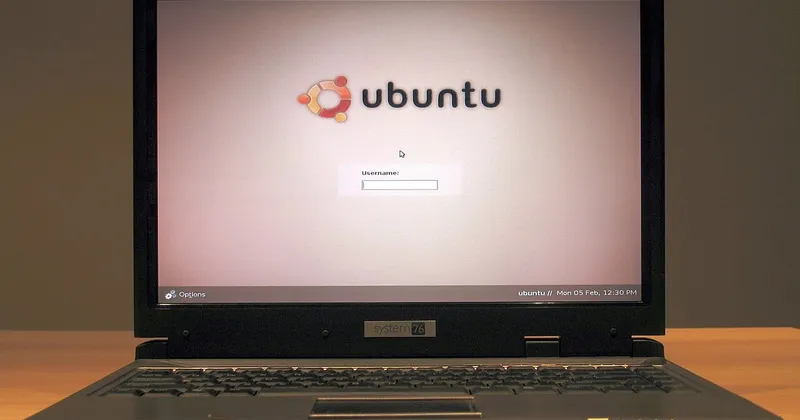
Canonical released Ubuntu 26.10, code-named Stonking Stingray, on 15 October 2026. It ships Linux 7.3, GNOME 51 and systemd 261, and it completes Ubuntu’s move to Rust-based core command-line tools. According to the official release notes, it is an interim release with nine months of support, ending in July 2027.
That support window is the first thing to weigh. Ubuntu 26.04 is a long-term support release; version 26.10 is a stepping stone, and GamingOnLinux notes that the next release, 27.04, is due in April 2027. If you install 26.10, you are signing up to upgrade again within a year.
What actually changed
The headline change is invisible until something breaks. Ubuntu’s default core utilities now run entirely on uutils, the Rust rewrite of GNU coreutils. The last GNU holdouts, cp, mv and rm, have been migrated. These are commands every shell script on the system calls, so this is the part of the release most likely to surface odd edge cases in old scripts.
Other plumbing moved too. The default D-Bus implementation is now dbus-broker instead of dbus-daemon, for both system and session buses. The Rust-based Sequoia PGP tools (sq and sqv) enter the main archive, while gpg stays available. systemd drops its generator for old System V init scripts, so any service that still relies on one needs a proper unit file.
On the desktop, the App Center gets a single details page for Snap and Deb packages and, as Linuxiac reports, a section that makes picking an NVIDIA driver simpler. There is also Myna, an opt-in speech-to-text preview that is not installed by default. Linuxiac’s description of it:
“Unlike cloud-based alternatives, Myna processes speech locally without sending recorded audio to external servers.”
Laptops without a hardware root of trust can now use TPM-backed full disk encryption, as long as a PIN or passphrase is also set. Canonical has already backported that to 26.04.1, so it is not a reason on its own to leave the LTS.
Who gains the most
Developers get the newest toolchains in the archive: GCC 15.2.0, Python 3.14.7, Go 1.27, Rust 1.97.1, LLVM 22.1.8 and .NET 10.0.112. OpenJDK 25.0.4 is the default, with OpenJDK 27 available as a separate package. If you build software that targets those versions, 26.10 saves you from installing them by hand.
Hardware tinkerers get official support for two RISC-V platforms, the SpacemiT K3 and SiFive BigSky, plus RISC-V desktop images. Companies using Microsoft accounts get sign-in through Entra ID passwords via authd.
Server admins get OpenSSL 4, OpenSSH 10.5, PHP 8.5.9, QEMU 11.0 and MySQL 9.7 LTS. That last one is where caution starts.
Reasons to hold off
The release notes list several changes that can break an existing system:
MySQL moves from 8.4 LTS to 9.7 LTS, and the old mysql_native_password plugin is gone. Any account still using it must be migrated first, and the upgrader will stop until you do.
OpenSSH is now split into openssh and openssh-gssapi packages. Fresh installs get the non-GSSAPI version, and the upgrader may pick the GSSAPI variant if Kerberos is in use. Canonical also warns that purging an openssh package left in the “rc” state can break remote access, with a fix still pending. On a remote server, that is not a bug you want to discover over SSH.
Machines with TPM-backed disk encryption cannot upgrade from 26.04 LTS to 26.10 at all yet. Canonical expects to add that during the release’s lifetime.
Some hardware has known problems in this release. The notes blame a Linux 7.3 regression for unusable keyboards on some Snapdragon X2 Elite laptops, with an external USB keyboard as the workaround. They also flag Wi-Fi drops on some Intel AX211 systems and display freezes on some AMD dual-GPU laptops. The kernel itself is a little early: the release images are based on 7.3-rc6, because the final upstream 7.3 was not out by Ubuntu’s release day.
Smaller removals may still bite. GNOME 51 drops WEP Wi-Fi support from Settings, QEMU no longer builds for 32-bit hosts, and HAProxy now defaults to a random load-balancing algorithm.
The verdict
For most people on 26.04 LTS, the sensible move is to stay put. Linuxiac’s Bobby Borisov puts it plainly: users who value stability and longer maintenance “may prefer to remain on Ubuntu 26.04 LTS.” The most useful security feature in this cycle, the wider TPM encryption support, is already in 26.04.1.
Upgrade if you need the new toolchains, run RISC-V hardware, or want to test your scripts against Rust coreutils before that change reaches more machines. Do it on a spare machine or a virtual machine first, migrate MySQL accounts before you start, and keep a second way into any remote server.
What is still open: Canonical has not said when TPM-encrypted systems will get an upgrade path, and the OpenSSH purge fix had no ship date in the notes at release.
Sources
- Ubuntu documentation: Ubuntu 26.10 release notes documentation.ubuntu.com
- Linuxiac (Bobby Borisov): Ubuntu 26.10 released with GNOME 51, Linux kernel 7.3 and Rust coreutils linuxiac.com
- GamingOnLinux (Liam Squires-Hand): Ubuntu 26.10 Stonking Stingray released gamingonlinux.com
More in Software
-
Chrome 156 got three security updates in nine days, with 426 fixes in total
Google shipped Chrome 156 on October 20 and patched it twice more by October 29. Here is what changed, who found the bugs, and how to make sure you are on the fixed build.
-
Python 3.15 makes UTF-8 the default and adds lazy imports; check your file I/O first
Python 3.15 adds a lazy keyword, a frozendict type and a sampling profiler. The change most likely to break existing code is UTF-8 as the default text encoding.
-
Firefox 157 ships its biggest visual refresh in years, with a Compact Mode and a sidebar opt-out
Mozilla's Firefox 157 redesigns toolbars, menus and the sidebar, adds themes and Compact Mode, and keeps a way back to the old sidebar until the end of 2027.