South Korea fines Samsung about $15 million over hidden Galaxy game throttling
Korea's Fair Trade Commission set a provisional 20.1 billion won fine for Galaxy S21, S22 and Tab S8 ads that left out GOS speed caps in games. Samsung says it will fight the ruling in court.
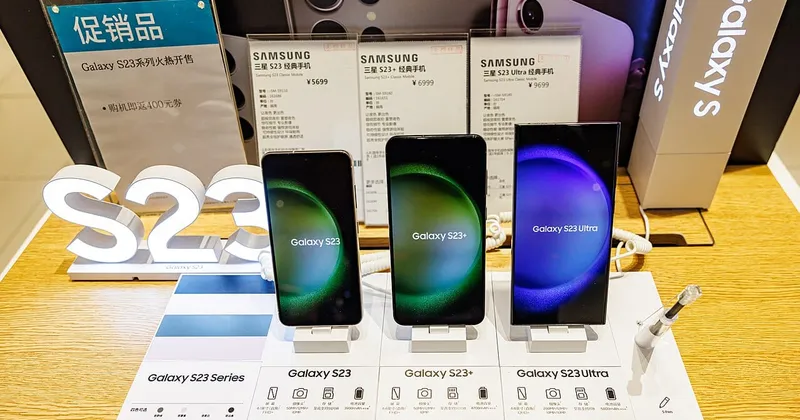
South Korea’s Fair Trade Commission (KFTC) said on October 27 that it will fine Samsung Electronics a provisional 20.1 billion won, about $15 million, and issued a corrective order over ads for the Galaxy S21 and S22 phones and the Galaxy Tab S8 tablets. The regulator found that Samsung sold these devices on gaming performance without telling buyers that its Game Optimizing Service (GOS) cut processor speeds as soon as popular games launched. Samsung says it will challenge the decision in court.
The devices are four to five years old, and the throttling itself was fixed in 2022. The ruling still matters for anyone buying a phone today, because it is about what a spec sheet is allowed to leave out.
What the regulator found
The ads in question ran from January 2021 to March 2022, according to The Korea Herald. During that time, GOS applied per-game rules that capped the CPU, the GPU and the screen refresh rate in specific titles: 82 games on the Galaxy S21 series, 47 on the S22 series and 8 on the Tab S8.
The KFTC’s clearest example is PUBG: New State on the Galaxy S22. With the game running, the CPU’s maximum clock fell from 2.99 GHz to 0.94 GHz, or 31.4% of its peak. The GPU’s ceiling dropped from 818 MHz to 220 MHz, or 26.9%. The regulator said the caps could cause stutter, input lag and lower graphics quality, and owners at the time complained of choppy gameplay and reduced resolution.
Yonhap’s report, carried by The Korea Times, adds a detail that undercuts the usual heat-management defence. The regulator said the caps applied regardless of device temperature. Meanwhile, the ads highlighted a 5-nanometer processor and a 120Hz display, two specs that the caps directly limited in the affected games. The KFTC treated the omission as “deceptive labeling or advertising” under the Act on Fair Labeling and Advertising.
When a company advertises a performance feature as a selling point, “it must also clearly inform consumers of any material limitations that affect that performance.”
That is the KFTC’s reasoning as quoted by The Korea Herald. The regulator also said the missing disclosure kept buyers from making rational purchasing decisions.
Samsung’s defence
Samsung rejects the finding. In its statement to Yonhap, the company said:
“GOS was a feature designed to optimize gaming performance and allow users to enjoy games stably for extended periods”
Its law firm, Jipyong, made a more technical argument, reported by The Korea Herald. It says the KFTC cited the ratio of the capped clock speed to the maximum, but did not show what that did to real gameplay, such as frame rates. It also says the per-game settings under sanction “are no longer in use”, and that no ruling anywhere has found Samsung legally liable.
Samsung has a record to point to. Galaxy owners in South Korea filed a class action over GOS, as Android Authority notes, and Samsung told Yonhap that all domestic and overseas lawsuits over the issue have concluded and that the related complaints to the regulator were withdrawn. None of that stops the KFTC from acting on its own, and the fine amount is still provisional.
Android Authority’s Stephen Schenck describes the sum as small next to Samsung’s size, but notable because an advertising complaint led to real consequences. Reports so far describe a fine and a corrective order. None mention money for the people who bought the phones.
What it means for Galaxy owners and buyers
If you still use a Galaxy S21, S22 or Tab S8, nothing changes on your device. Samsung shipped an update in March 2022 that lifted the speed caps, added a Game Performance Mode with looser thermal limits, and stopped blocking users from bypassing the per-game rules, according to The Korea Herald.
The wider lesson is about how phones are sold. A spec sheet lists peak numbers: the chip’s process node, its top clock speed, the display’s refresh rate. It says nothing about how long a phone holds those numbers in a 30-minute gaming session, or whether software lowers them for named apps. The GOS case shows the gap can be large: in PUBG: New State, the S22’s CPU was capped at under a third of its peak clock.
For buyers who care about games, that points to two habits. Read reviews that run long, sustained tests rather than a single benchmark pass, and check whether the phone has a user-selectable performance mode. A short benchmark run favours the peak; a long one shows what the phone actually holds.
Two questions are still open. The first is whether Samsung’s appeal succeeds, given Samsung’s point that no court has yet found it liable over GOS. The second is whether Korean regulators now expect clearer disclosure of game-specific performance profiles from every phone maker, or only from Samsung. The KFTC’s wording applies to any company that advertises performance as a selling point.
Sources
- The Korea Herald: Samsung Electronics fined W20.11b for hiding game performance limits on Galaxy devices biz.heraldcorp.com
- The Korea Herald: Samsung contests W20b fine, vows legal fight over 'deceptive ad' ruling biz.heraldcorp.com
- The Korea Times (Yonhap): FTC to slap $15.1 mil. fine on Samsung Electronics for misleading gaming ads koreatimes.co.kr
- Android Authority: Samsung faces fines for throttling Galaxy gaming performance androidauthority.com
More in Phones
-
Apple will replace iPhone Duo units whose inner screens crack at the hinge
Early iPhone Duo owners report inner displays cracking along the fold within days of launch. Apple calls it a small number of units and sends owners to AppleCare, no AppleCare+ needed.
-
iPhone 18 Pro starts at $1,199 with a variable-aperture camera and no base iPhone yet
Apple announced the iPhone 18 Pro and Pro Max on September 9 with the 2nm A20 Pro chip. Prices rose by $100, and the standard iPhone 18 is not due until 2027.
-
Galaxy S26 FE costs $50 more than its predecessor and changes little but the chip
Samsung's Galaxy S26 FE goes on sale on September 4 at $699 in the US. It brings an Exynos 2500 and One UI 9, while the battery, screen size and RAM stay the same.