Pixel 11 starts at $899 with 256GB, and the Pro models give up some RAM
Google's Pixel 11 range went on sale on August 20 with the Tensor G6 chip. Entry prices rose because storage doubled, while the cheapest Pro XL has less memory than last year's.
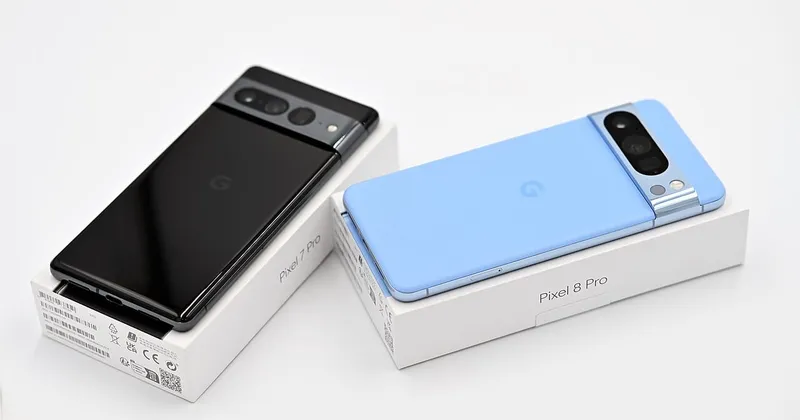
Google announced the Pixel 11, Pixel 11 Pro, Pixel 11 Pro XL and Pixel 11 Pro Fold on 12 August 2026. Pre-orders opened the same day and the phones reach shops on 20 August. In the US the range starts at $899 for the Pixel 11, $1,099 for the Pro, $1,299 for the Pro XL and $1,899 for the Pro Fold, according to TechRepublic.
Those prices look like a rise, and for the cheapest models it mostly is a storage story. For the biggest Pro phones, it is partly a memory story.
Where the extra money goes
TechRepublic notes that the Pixel 10 began at $799 with 128GB. Every Pixel 11 now starts at 256GB, so the entry model costs $100 more in sticker terms but no longer comes in a 128GB version. Android Authority reports that Google says the base Pixel 11 and Pixel 11 Pro cost the same as the 256GB versions of the Pixel 10 and Pixel 10 Pro did.
Finder’s Australian pricing makes the same point from another angle. The Pixel 11 at A$1,499 only “looks $150 higher,” writes Finder’s Mariam Gabaji, because the cheaper 128GB model has gone. The Australian Pixel 11 Pro price is unchanged, while the Pro XL is up A$100 at both 256GB and 1TB.
So the useful question is whether you wanted 256GB anyway. If you did, the base Pixel 11 is a like-for-like price. If you were happy with 128GB, there is no cheaper way in this year.
The RAM catch on the Pro XL
Android Authority puts the price increases down to the memory shortage and lists RAM by variant. The Pixel 11 has 12GB. The Pro and Pro XL come with 12GB or 16GB, and the 16GB option appears only on the 512GB and 1TB versions. The Pixel 10 Pro and Pro XL had 16GB across the board.
That means the cheapest Pro XL, at $1,299, costs $100 more than the entry Pixel 10 Pro XL did, and the article’s verdict is blunt: “you’re getting less RAM in the cheapest XL compared to last year’s model.”
Extra RAM mostly matters for keeping apps alive in the background and for running on-device AI features, so the cut is easy to miss on a spec sheet and hard to judge from one. Android Authority only reports the numbers; neither it nor Google says how much real-world difference 12GB makes. If you plan to keep a Pro XL for the seven years of updates Google promises, the 16GB variants are the safer buy, at $1,419 for 512GB.
What you get for it
All four phones run Google’s new Tensor G6. Google says the CPU is up to 20% more power-efficient and that apps load 15% faster than on last year’s phones, as Finder reports. Android Authority adds Google’s claims of 25% faster web browsing and 50% more TPU compute, and says a benchmark app shows a seven-core CPU layout that Google has not confirmed.
The base Pixel 11 gets a new 48MP main camera with a 1/1.56-inch sensor, up from 1/2-inch, which Google says gives 56% better light sensitivity. Its 13MP ultrawide and 10.8MP 5x telephoto are unchanged. On the Pro models the main sensor is new, but Android Authority says its size and aperture match last year’s. The 5x telephoto gets a larger 1/1.95-inch sensor.
The gap between the standard phone and the Pro models is wider than before. Only the Pro versions get Instant Night Sight, which the article says is up to 4.5x faster than the regular mode, along with the LED indicator in the camera bar, Wi-Fi 7 and UWB. A Pro purchase also includes six free months of Google AI Pro. The standard Pixel 11 has Wi-Fi 6E and a 60-120Hz display without LTPO, while the Pro models run from 1 to 120Hz.
Batteries are 4,985mAh on the Pixel 11, 4,850mAh on the Pro and 5,115mAh on the Pro XL. All three support 25W Qi2.2 wireless charging. Android 17 is installed, with seven years of OS, security and Pixel Drop updates on each.
Who should buy
For someone on a Pixel 9 or older who wants a camera upgrade and a lot of storage, the Pixel 11 at $899 is the sensible pick, because the new main sensor is the biggest camera change in the range that the base phone shares. The Pro at $1,099 makes sense if you want the faster Night Sight and the variable refresh rate display.
If you own a Pixel 10, the case is thin. The reported changes are a faster chip, a larger base sensor and brighter screens, and nothing in these reports suggests a reason to swap early.
Still unknown is how the Tensor G6 holds up in independent tests. Full reviews with sustained-load testing will show whether the 20% efficiency claim shows up in battery life, and whether 12GB of RAM is enough on a Pro XL. Until then, treat Google’s numbers as claims.
Sources
More in Phones
-
Apple will replace iPhone Duo units whose inner screens crack at the hinge
Early iPhone Duo owners report inner displays cracking along the fold within days of launch. Apple calls it a small number of units and sends owners to AppleCare, no AppleCare+ needed.
-
South Korea fines Samsung about $15 million over hidden Galaxy game throttling
Korea's Fair Trade Commission set a provisional 20.1 billion won fine for Galaxy S21, S22 and Tab S8 ads that left out GOS speed caps in games. Samsung says it will fight the ruling in court.
-
iPhone 18 Pro starts at $1,199 with a variable-aperture camera and no base iPhone yet
Apple announced the iPhone 18 Pro and Pro Max on September 9 with the 2nm A20 Pro chip. Prices rose by $100, and the standard iPhone 18 is not due until 2027.